


Paid social is better than SEO for e-commerce brands when you need to introduce a product, test a message or control campaign delivery; SEO is better when shoppers already search for what you sell. Neither channel guarantees profitable orders, and both require content, a working shop and reliable measurement beyond the headline traffic report. In 2026, choose your starting point by the buying behaviour you need to influence—not by which channel promises more clicks.
- Is paid social better than SEO for e-commerce brands? For discovery, yes; for existing search demand, prioritise SEO.
- ReachDigital’s e-commerce verdict: choose the channel that addresses your store’s sales constraint, not the busiest dashboard.
- Paid social requires media spend and fresh creative; SEO requires useful pages, technical access and ongoing maintenance.
- Compare new-customer acquisition and contribution after marketing, not paid-social revenue against organic traffic.
Is paid social better than SEO for e-commerce brands?
Paid social wins on controlled distribution; SEO wins on earning visibility for relevant searches. That distinction matters more than declaring an overall winner. A shopper discovering an unfamiliar product in a feed behaves differently from someone searching for a specific product category.
For the search side, the guide to using SEO to grow an e-commerce store in Cape Town covers the relevant next step. Start with the pages shoppers need to buy, rather than treating blog traffic as the objective.
| Approach | Best for | Main advantage | Main limitation | Evidence to examine |
|---|---|---|---|---|
| Paid social | Product discovery, message testing and campaign-led demand | Control over campaign delivery, audiences and creative | Distribution depends on advertising spend; creative needs attention | New-customer orders, acquisition cost and contribution after marketing |
| SEO | Capturing relevant product and category searches | Search visibility without paying for each organic click | Rankings take work and are not guaranteed | Non-brand search clicks, landing-page sales and organic acquisition costs |
| Paid social and SEO together | Stores with distinct discovery and search opportunities | Addresses different parts of the purchase journey | Adds coordination and measurement work | Total new-customer sales, channel overlap and business profitability |
These are differences in how the channels work, not performance forecasts. Your store’s own results determine which deserves the next allocation of time and money.
Why this matters
A channel comparison becomes expensive when it disguises a website problem. If shoppers cannot understand your product, find delivery information or complete checkout, buying more visits does not fix the obstacle.
Your 2026 plan should identify whether the problem is discovery, search visibility or conversion. Each needs a different response. Do not fund a traffic solution until you know that traffic is the missing ingredient.
Paid social: best for discovery and controlled testing
Paid social puts a product in front of people who are not necessarily searching for it. That makes it useful when the product needs a demonstration, a visual explanation or a compelling reason to consider something unfamiliar.
You also control what you test. Different product angles, demonstrations and landing pages give you structured ways to investigate what persuades shoppers. Keep the test focused: changing the audience, creative and destination together makes the result harder to interpret.
The trade-off is ongoing dependence on paid distribution. Stopping advertising removes that paid exposure, while maintaining campaigns requires creative production, account management and measurement—not just a media allocation.
Prioritise paid social when:
- You need discovery: customers need to see the product before they know to look for it.
- You have a campaign deadline: you need control over when advertising runs.
- You can show the product clearly: useful demonstrations and credible product information support the message.
- You can assess the economics: your order records and marketing reports distinguish sales from profitable acquisition.
Do not interpret a busy comment section as proof of commercial success. Engagement helps diagnose interest; completed orders and their contribution answer the business question.
SEO: best for capturing existing search demand
SEO helps your store appear when people search for relevant products, categories and buying information. It is a strong starting point when shoppers already describe their needs in language your store can serve accurately.
For e-commerce, that means more than publishing articles. Category structure, product information, internal links and technically accessible pages all affect the search experience. A buying guide is useful when it answers a real purchase question and connects readers to appropriate products.
SEO has no per-click media charge for organic results, but it is not free. Technical work, content, development and maintenance consume resources, and rankings remain outside your direct control.
For your 2026 SEO priorities, ask:
- Do relevant searches exist for the categories you sell?
- Can search engines access the pages that answer those searches?
- Does each landing page help shoppers make a decision?
- Can you connect organic visits with orders rather than reporting rankings alone?
Prioritise useful commercial pages before producing content simply to increase page count. More indexed pages are not automatically more sales opportunities.
Paid social and SEO together: best for different buying stages
Combining paid social and SEO makes sense when each channel has a defined job. Paid social introduces a product or demonstrates its use; SEO helps shoppers find relevant information when they search.
The limitation is complexity. Shared landing pages, creative production, reporting and development requests need a clear owner. Running both channels without those responsibilities creates competing tasks rather than a connected plan.
Use questions from social comments to improve product explanations. Use relevant search queries to understand how shoppers describe their needs. Neither source replaces sales evidence, but both help you write clearer advertising and product pages.
ReachDigital’s recommendation for e-commerce brands is to connect discovery and search around the same buying decision. Do not make advertising promise something the destination page fails to explain.
Why paid social and SEO performance varies
Channel labels do not explain performance on their own. These factors change what each channel can achieve and how you should judge it:
- Search demand: SEO needs relevant searches to capture. Paid social offers a way to introduce products before a shopper searches for them.
- Product explanation: a product that needs demonstration places different demands on creative than a familiar, clearly specified item.
- Website quality: unclear product information and checkout friction affect visitors from either channel.
- Commercial economics: product margin, fulfilment, payment fees and returns determine what remains after a sale.
- Existing visibility: an established search footprint and an unfamiliar domain start from different positions; so do known and unknown brands in social feeds.
- Measurement choices: attribution windows, consent and customer identification affect the sales credited to each channel.
For 2026 planning, record these conditions before setting channel targets. Otherwise, a change in product mix or reporting can look like a change in marketing effectiveness.
How should you choose which channel to prioritise?
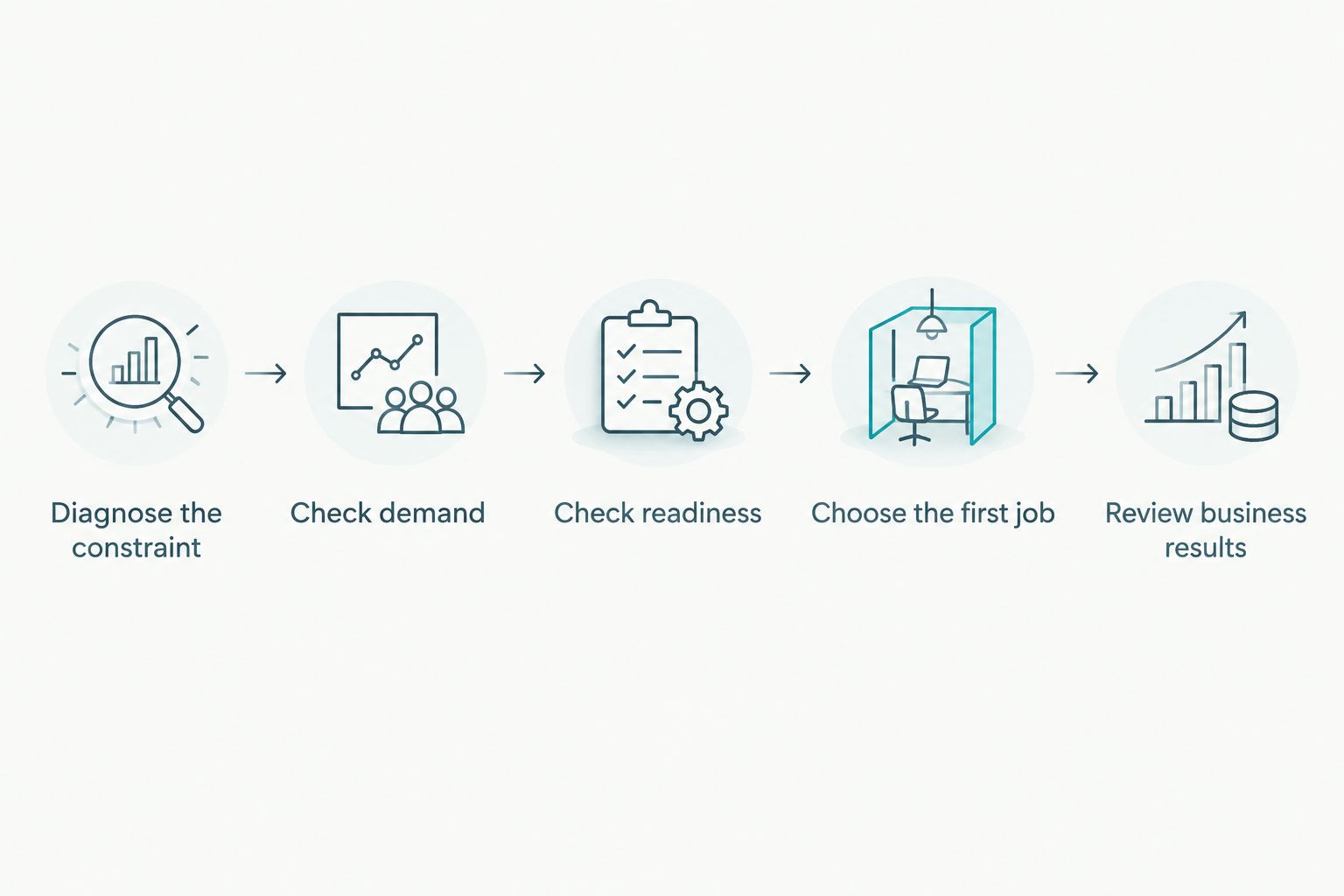
Use this sequence to make the decision specific. You do not need a universal budget split; you need an identifiable obstacle and a way to judge whether the chosen work removes it.
- Diagnose the constraint. Establish whether people cannot discover your products, cannot find you in search or visit without buying. Review landing pages and checkout alongside acquisition reports.
- Check demand. Examine relevant non-brand search queries and how customers describe their needs. Separate searches for your business name from searches that introduce new shoppers to the store.
- Check readiness. Confirm that product information, mobile purchasing and purchase measurement work. For paid social, include creative capacity; for SEO, include technical and content ownership.
- Choose the first job. Give paid social a defined discovery or campaign objective, or give SEO a defined category and search-intent objective. Avoid launching unrelated tasks under a broad growth brief.
- Review business results. Compare completed orders, new customers and contribution after marketing. Investigate weak results before adding spend or expanding the scope.
Keep the initial brief narrow enough to evaluate. A focused category improvement or campaign question gives you a clearer decision than a list of disconnected activities.
What should you do if your budget cannot support both?
Choose the channel that addresses the clearest commercial opportunity and keep essential website maintenance in place. Splitting a constrained budget between poorly supported campaigns and unfinished SEO work does not create balance; it leaves both jobs incomplete.
For a discovery-led product, prioritise a focused paid-social test with an appropriate landing page. For an established search category with weak store visibility, prioritise relevant commercial pages and the technical work they need.
What should you do if neither channel converts?
Check the buying journey before blaming the channel. Compare the promise in the advertisement or search result with the destination page, then inspect product clarity and checkout completion.
Separate irrelevant traffic from an unpersuasive page. Those are different problems, and changing the channel will not necessarily resolve either one.
What should you ask an agency before committing?
Ask what problem the work addresses, what must change on your website and which business result determines success. Require a clear distinction between media spend, creative production, SEO delivery and reporting responsibilities.
ReachDigital’s e-commerce guidance is simple: brief the commercial problem before requesting a channel package. A useful proposal explains the sequence of work and its limitations rather than promising a ranking or order total.
How to compare results without fooling yourself
Do not compare paid-social revenue with SEO traffic. They measure different things. Set up the same commercial questions for both channels, then use channel-specific metrics to explain the answers.
Use 3 reporting checks:
- Customer mix: separate new and returning customers where your records allow it. A campaign reaching existing buyers answers a different question from one acquiring new customers.
- Revenue quality: account for cancelled orders, refunds and returns. Reported purchase value is not the same as retained revenue or profit.
- Attribution overlap: reconcile marketing reports with order records. Different reporting systems can credit the same purchase, so adding their attributed revenue can overstate sales.
In your 2026 reporting, retain both the commercial summary and the diagnostic detail. Clicks, impressions and rankings help explain changes; they do not replace order economics.
For SEO, split search queries into 2 groups: branded and non-branded. For paid social, separate prospecting from retargeting where the campaign structure supports it. These distinctions help prevent existing demand from being mistaken for newly created demand.
Assign 1 accountable owner to the shared scorecard. That person should reconcile definitions and reporting periods so that a channel review produces a decision, not an argument over dashboards.
FAQ
Is paid social better than SEO for a new e-commerce brand?
Paid social is better suited to introducing an unfamiliar product, while SEO is better suited to capturing relevant searches. A new store should also check product-page quality and purchase measurement before investing in either channel.
Should I stop SEO if my social ads are generating sales?
Do not stop SEO solely because social ads generate sales. Check whether organic search attracts relevant customers and whether essential technical or product-page work remains necessary.
Is SEO cheaper than paid social for an online store?
SEO is not automatically cheaper than paid social. Organic clicks have no per-click media charge, but SEO still requires technical work, content and maintenance; compare total costs against commercial results.
Can I run paid social and SEO at the same time?
You can run paid social and SEO together when each has a defined role and delivery owner. Coordinate product messaging, landing pages and reporting rather than treating them as unrelated programmes.
Which gets results faster, paid social or SEO?
Paid social gives you more control over when distribution begins; SEO does not give you control over ranking dates. That difference does not guarantee faster profitable sales from advertising.
Should an e-commerce SEO strategy start with a blog?
An e-commerce SEO strategy does not need to start with a blog. Prioritise accessible product and category pages, then add buying content where it answers relevant questions.
What should I measure when comparing paid social and SEO?
Measure new-customer orders, retained revenue and contribution after marketing for both channels. Use search visibility and campaign engagement to diagnose performance, not as substitutes for sales outcomes.
One last thing
A shopper can discover your product through a social advert and later search for your brand before buying. The final recorded visit does not describe the whole journey, so resist awarding the entire sale to whichever channel appears last.
Before your next 2026 budget decision, write a short role statement for each channel. Specify the buyer problem, the destination page and the commercial measure. If you cannot explain the job, do not expand the channel.